Why Does My Shoulder Hurt?
Shoulder impingement is one of the most common causes of shoulder pain, yet many people don’t realize that’s what’s causing their symptoms. Many people with shoulder pain ask themselves the same questions:
“Did I sleep on it wrong?”
“Maybe I pulled something at the gym?”
“Could I have hurt it by helping my friend move this weekend?”
For many people, shoulder pain seems to appear out of nowhere. You may not remember injuring your shoulder at all. Maybe pickleball felt fine this week. Cooking dinner last night didn’t hurt. Then suddenly, lifting your arm becomes painful. You can’t lie comfortably on that side, and it is difficult to reach behind your back for a belt loop or a bra strap.
What Is Shoulder Impingement?
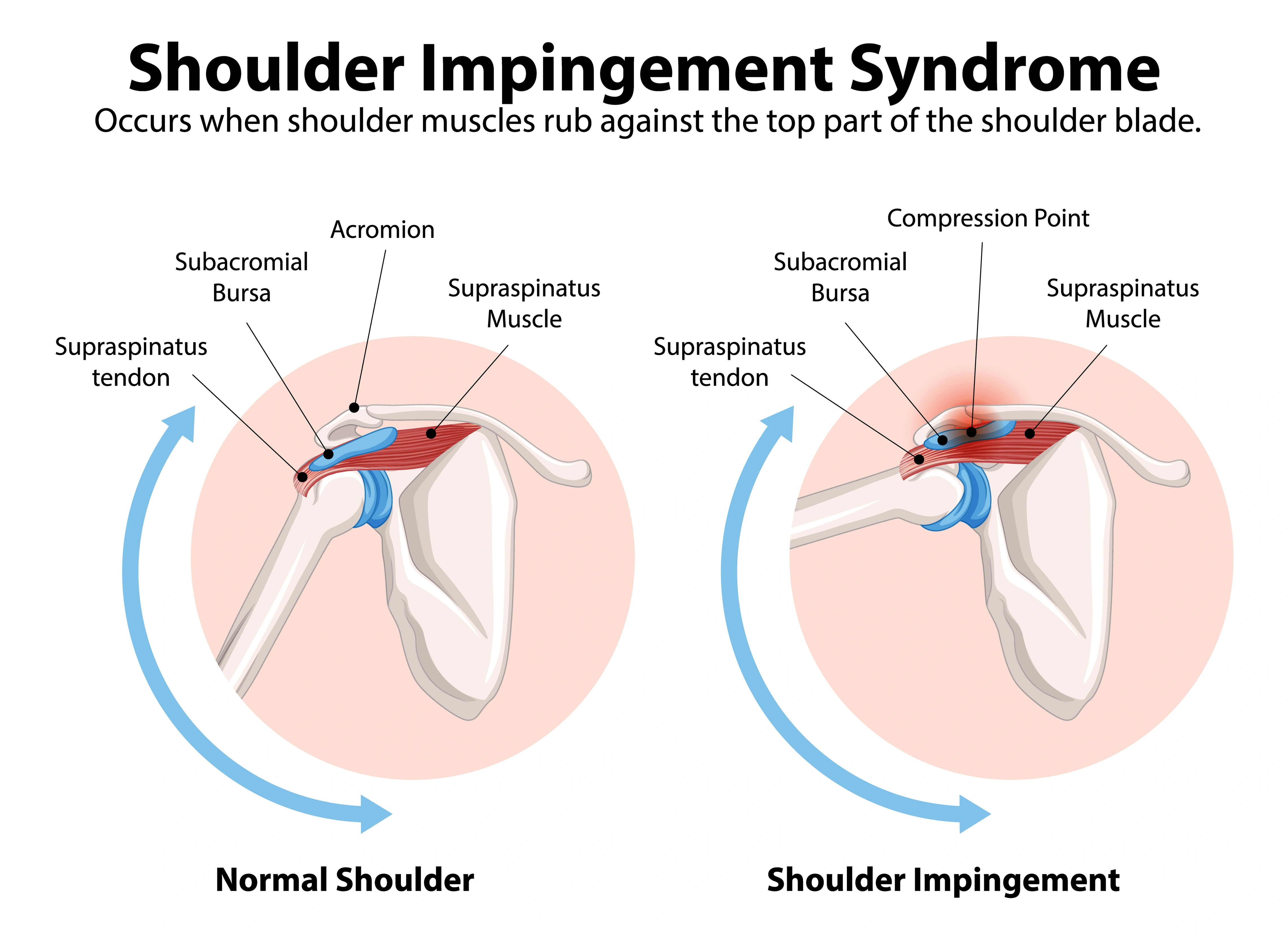
One of the most common causes of this type of pain is shoulder impingement, also known as rotator cuff syndrome (RTC syndrome).
Shoulder impingement occurs when the tendons and muscles of the rotator cuff become irritated or compressed during movement. This irritation can lead to inflammation, pain, weakness, and limited mobility.
In many cases, the problem develops gradually due to poor shoulder mechanics during lifting, reaching, or repetitive activities.
Common Causes of Shoulder Impingement
Several factors can contribute to shoulder impingement, including:
- Repetitive overhead lifting
- Weak rotator cuff muscles
- Muscle imbalances between the chest and upper back
- Poor posture or movement mechanics
- Falling on the shoulder
- Repetitive sports or work activities
- Or a combination of these factors
The good news is that conservative treatment options like physical therapy have proven to improve both pain and function in patients experiencing shoulder impingement symptoms.
Common Symptoms of Shoulder Impingement
Symptoms can vary from person to person, but common signs of shoulder impingement include:
- Pain when lifting your arm
- Difficulty reaching overhead or behind your back
- Pain when lying on the affected shoulder
- Weakness in the shoulder or arm
- Sharp pain with certain movements
- Stiffness or limited range of motion
Some patients also experience discomfort during workouts, sports, yard work, or everyday tasks like getting dressed.
How Physical Therapy Helps Shoulder Impingement
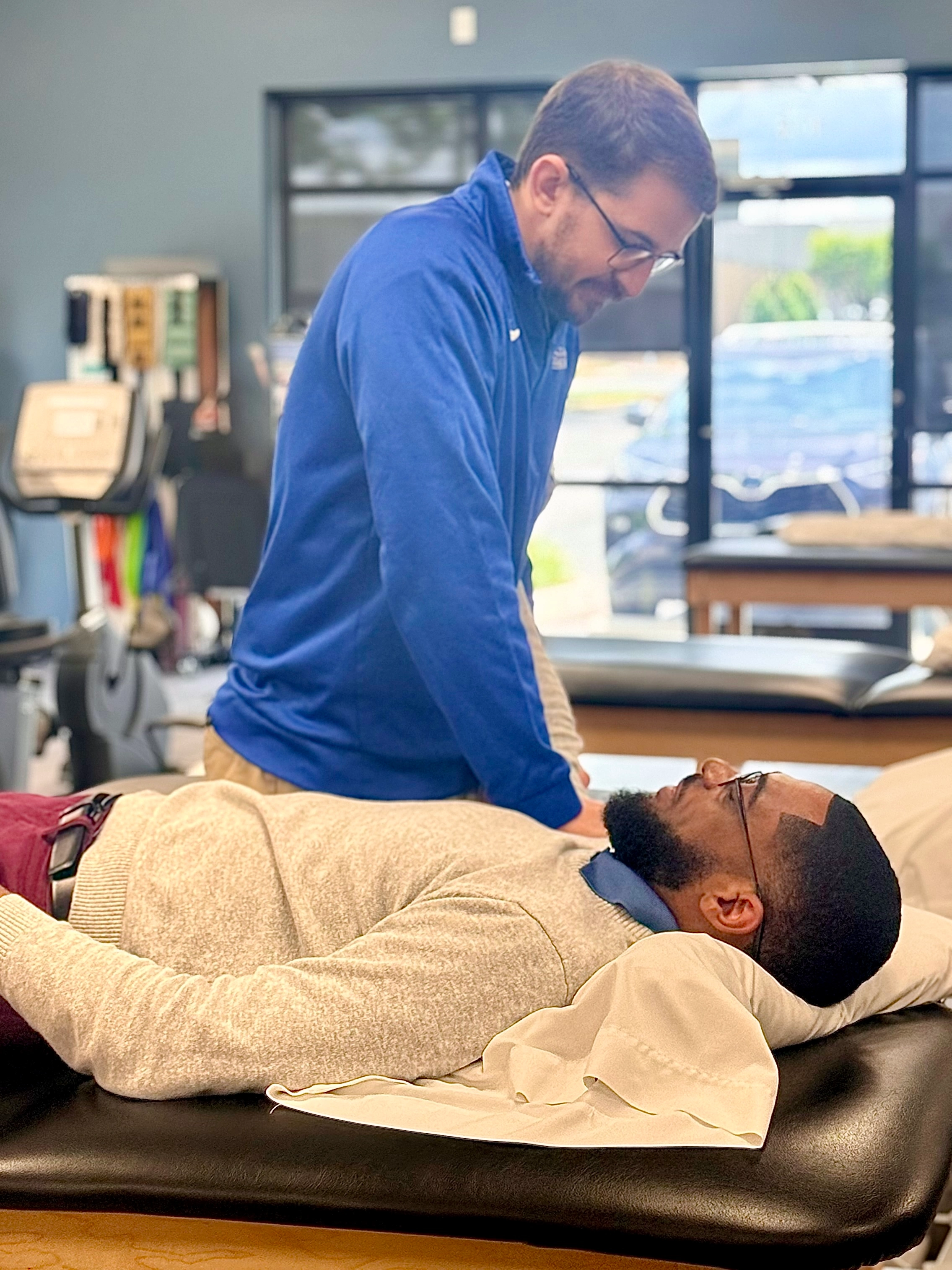
Physical Therapy is often one of the first and most effective treatments for shoulder impingement.
Treatment usually begins with gentle stretching and range-of-motion exercises to improve mobility, reduce stiffness, and calm inflammation in the muscles and tendons around the shoulder.
Sometimes, the rotator cuff may be too irritated for direct strengthening exercises. Because of this, treatment commonly starts by strengthening the muscles around the shoulder blade (scapula) first, since the scapula plays a major role in healthy shoulder movement and lifting mechanics.
As inflammation around the rotator cuff decreases and mobility improves, we can shift our focus to rotator cuff strengthening exercises.
Treatment may also include:
- Activity modification
- Reducing overhead movements
- Postural training
- Manual therapy techniques
- Ice
How Long Does Recovery From Shoulder Impingement Take?

Some people experience relief quickly, while others notice gradual progress over time. Most patients begin seeing meaningful improvements in pain and function within about one month of starting physical therapy.
Doctors of Physical Therapy (DPTs) are musculoskeletal experts trained to evaluate shoulder conditions and determine whether further imaging, such as an X-ray or MRI, may be appropriate. Physical therapists also work closely with orthopedic providers throughout the rehabilitation process.
Finally, if you’ve tried treatment or injections without relief, there may be another factor contributing to your shoulder pain.
In some cases, the cervical spine (neck) can refer pain to the shoulder region. Neck involvement is particularly suspected when patients’ symptoms include numbness or tingling in the shoulder or arm.
At STAR Physical Therapy, we take a very comprehensive approach to your treatment by identifying and addressing the source of the symptoms, not just the location of your pain.
Ready To Get Relief?
If you’re ready to address that nagging shoulder pain, our team at STAR Physical Therapy is here to help you get back to the activities you love most, comfortably, confidently, and pain-free. Find a clinic near you and schedule an evaluation with STAR Physical Therapy to take the first step toward lasting relief.
| Written by Easton May, PT, DPT, OCS • Physical Therapist • STAR Physical Therapy – Springfield |