
Here’s What You Need To Know About Elbow Pain
If you experience elbow pain when lifting or gripping, you’re not alone. This common issue can develop gradually or appear suddenly, often interfering with workouts, opening jars or doors, carrying groceries, or even shaking someone’s hand. As an Occupational Therapist at STAR Physical Therapy, I frequently work with patients who come in with elbow pain during everyday tasks. While it may seem minor at first, it often worsens if not addressed. So, what’s causing elbow pain when lifting or gripping?
What are the 3 Most Common Causes of Elbow Pain?
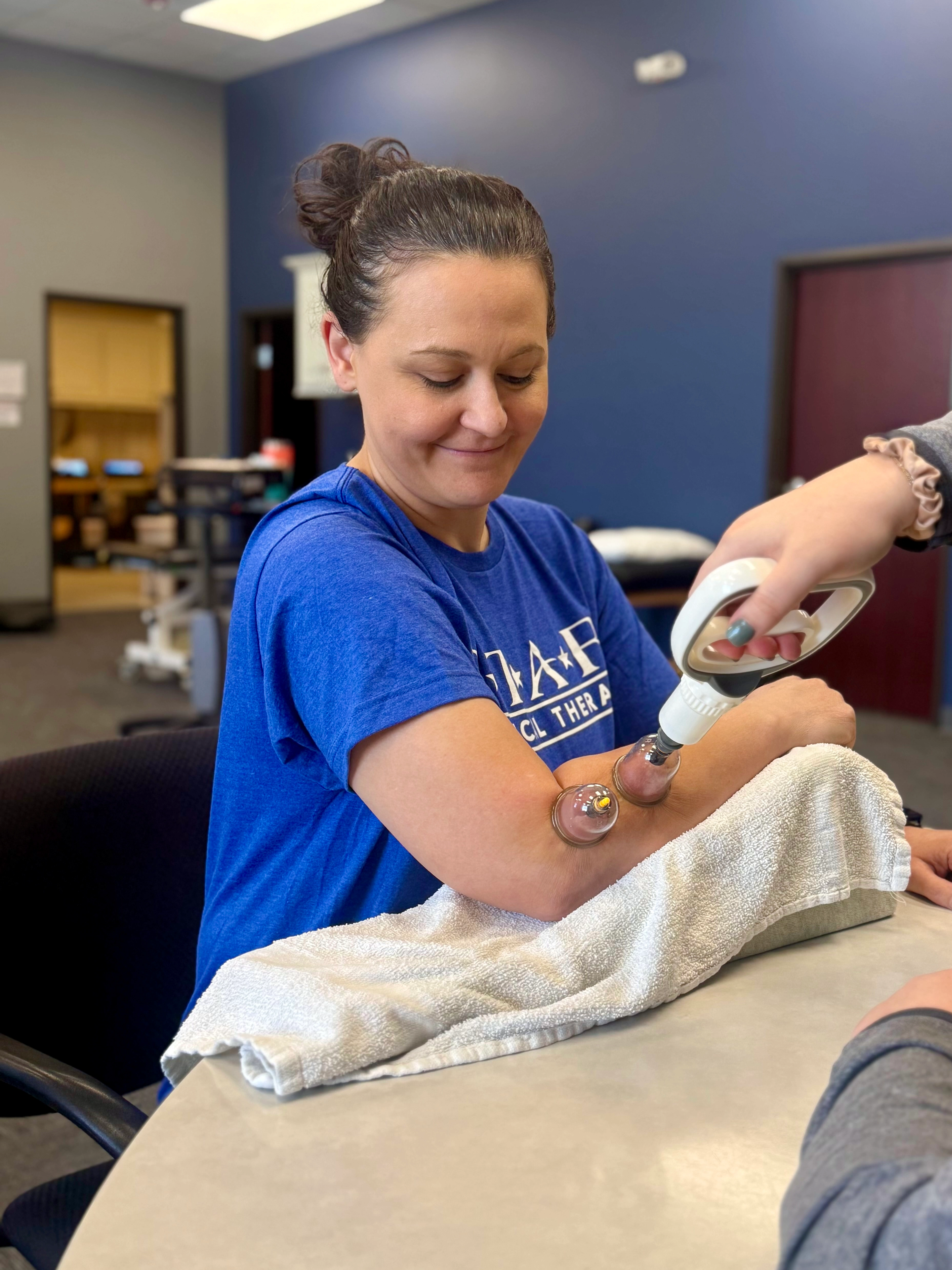
There are several common causes of elbow pain when lifting or gripping. Identifying the underlying cause is essential, as it guides my treatment approach and allows me to tailor interventions to each individual’s needs. Here are the three most common causes of elbow pain that I see in the clinic:
Tendinopathies (overuse injuries) are the most common cause of elbow pain. These overuse injuries include:
- Lateral Epicondylitis, often referred to as “Tennis Elbow,” is pain and irritation of the tendons on the outside of the elbow caused by repetitive gripping, wrist extension, or forearm rotation.
- Medial Epicondylitis, commonly known as “Golfer’s Elbow,” is pain and irritation of the tendons along the inside of the elbow caused by repetitive wrist flexion and forearm rotation.
Repetitive Strain and Overuse
Repeated activities like gripping, lifting, typing, exercising, or using tools can gradually place excessive stress on the elbow. Over time, this repeated strain can lead to inflammation, irritation, and persistent discomfort. significantly to elbow pain symptoms.
Poor Movement Mechanics and Muscle Imbalances
Movement patterns are more important than many people realize. Poor mechanics and muscle imbalances, especially with insufficient strength or stability in the shoulder or wrist, can increase stress on the elbow. Over time, that added strain can lead to irritation and pain in the elbow.
I often encourage patients to pay closer attention to their daily movement habits. Small changes in how you lift, grip, or position your wrist can make a big difference. When these tissues become irritated, your body may begin to compensate, leading to stiffness, weakness, and difficulty with everyday tasks such as opening jars or carrying bags.
What Can I Try At Home?
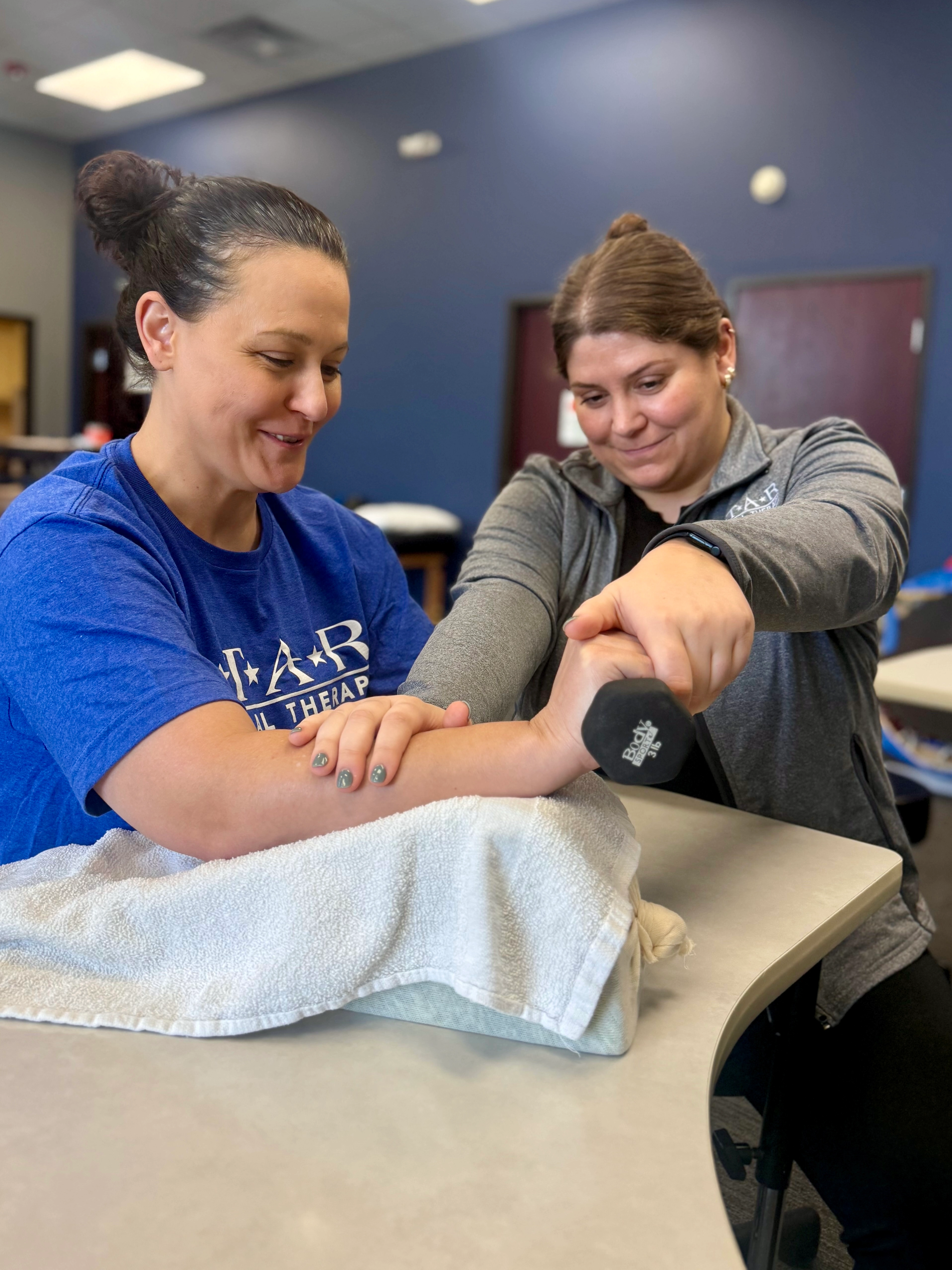
When symptoms first begin, I typically recommend starting with conservative, at-home strategies. The goal is to reduce irritation while still keeping the arm moving to avoid stiffness. Fortunately, several at-home strategies can help manage symptoms. Early self-care can calm symptoms and protect healing tissues. Consider these strategies for elbow pain when lifting or gripping:
- Activity modification: Modifying activities to temporarily minimize or eliminate movements that worsen pain is an important first step.
- Ice or Heat: Apply an ice or heat pack to the area for 10–15 minutes, 1–3 times daily, especially after activity. Place a cloth between the ice or heat pack and the skin. The use of ice can help calm acute irritation, while heat may be more beneficial for stiffness.
- Gentle stretching: To relieve outer elbow pain, begin by straightening your elbow. With your palm facing down, gently bend your wrist and rotate your forearm inward until you feel a stretch along the top of your forearm. For inner elbow pain, straighten your elbow with your palm facing up. Gently extend your wrist back until you feel a stretch along the inside of your forearm. Hold each stretch for 20–30 seconds, repeat 2–3 times, and avoid any sharp or worsening pain.
- Light Strengthening: Gradual strengthening exercises, especially those focusing on eccentric loading of the wrist muscles, can also be helpful.
- Bracing: In some cases, wearing a wrist cock-up brace may reduce strain on the affected structures.
| “I also emphasize finding the right balance between rest and movement. Completely avoiding use of the arm can lead to stiffness, while pushing through pain can make things worse.” — Windee Johnson, OTR/L, OTD |
When Should I Seek Help For Elbow Pain?
Many cases of elbow pain improve with a short period of rest and home strategies. If your symptoms don’t improve or begin to interfere with daily life, it may be time to seek professional care.
Signs to look for include:
- Pain lasting more than 2–3 weeks
- Symptoms that continue to worsen despite rest
- Weakness, numbness, or tingling
- Difficulty with daily tasks like gripping, lifting, or opening items
- Pain that limits work, exercise, or normal activities
In these cases, more structured treatment can make a significant difference.
How Can Occupational Therapy Help With Elbow Pain?
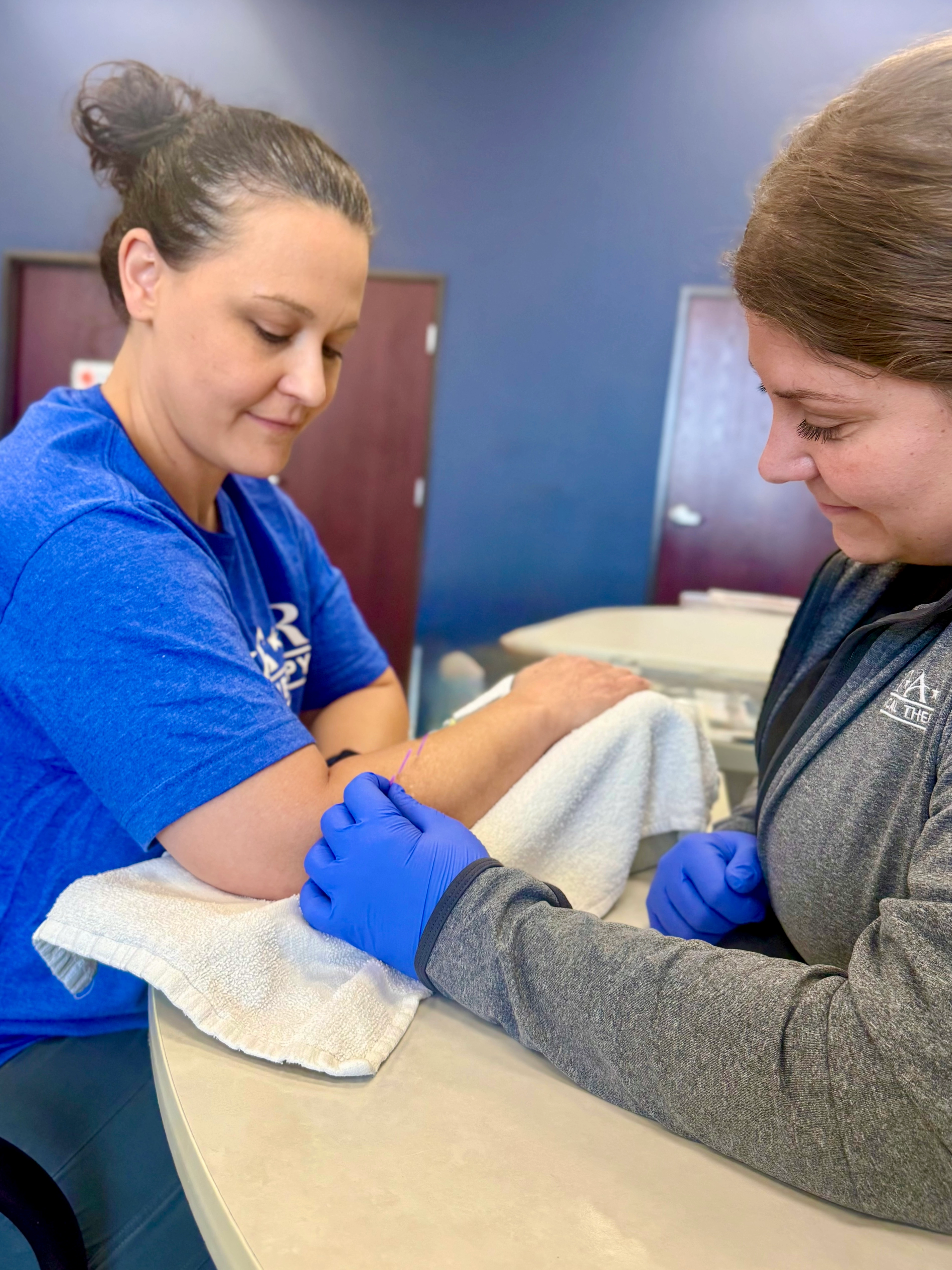
At STAR Physical Therapy, we commonly help patients across Tennessee and Arkansas recover from elbow pain caused by work, sports, and everyday activities. Occupational Therapy plays a key role in recovery by addressing the root cause of the problem rather than just the symptoms. In the clinic, treatment is always tailored to the individual and may include:
- Targeted Strengthening Programs: Gradual tendon loading to rebuild strength safely and effectively.
- Manual Therapy: Hands-on treatment techniques, including soft tissue mobilization and joint mobilization, designed to improve mobility and reduce pain.
- Modalities: Dry Needling, taping, or therapeutic ultrasound to support the healing process.
- Activity Modification & Education: Guidance on proper movement patterns and joint protection techniques to prevent recurrence.
- Splinting or Bracing: Used when appropriate to reduce strain and allow tissues to recover.
- Functional Training: Helping you safely return to work, the gym, and daily activities.
Through a combination of these approaches, our goal is to restore strength, improve mobility, and reduce pain so you can confidently return to work, sport, and your daily activities.
Ready To Get Relief?
Pain with simple tasks like lifting groceries, opening doors, or working out shouldn’t become your new normal. Addressing elbow pain early is key to a quicker recovery and can help prevent long-term irritation. Our team at STAR Physical Therapy is here to help you get back to the activities you love most, comfortably, confidently, and pain-free. Find a clinic near you and schedule an evaluation with STAR Physical Therapy to take the first step toward lasting relief.
| Written by Windee Johnson, OTR/L, OTD • Occupational Therapist • STAR Physical Therapy – Clarksville North |